
Hand Carry Luggage Size Guide for Pakistani Airports
Traveling through Pakistani airports can be stressful, especially when you're unsure about the luggage rules and regulations. Understanding the hand carry luggage size is necessary to avoid the last-minute additional fees, or having to check in your bag very unexpectedly. Whether you're flying domestically within Pakistan or internationally to another country, knowing the standard dimensions and weight limits can make your journey smoother and much more convenient.
This comprehensive guide covers everything you need to know about cabin size luggage dimensions, airline luggage size requirements. This will guide you about how to choose the right bag for your travel needs. We'll break down the measurements, provide useful charts, and answer common questions that Pakistani travelers have about luggage bags.
What Is Hand Carry Luggage?
Hand carry luggage, also known as cabin baggage or carry-on luggage. It refers to the bag you're allowed to bring with you into the aircraft cabin. Unlike checked luggage that goes into the cargo hold of a plane, hand carry luggage stays with you throughout the flight. This gives you immediate access to essential items like; medications, electronics, travel documents, change of clothes and others.
The main advantage of hand carry luggage is to be convent. You don't have to wait at the Luggage bag claim area after landing, it saves valuable time. It reduces the risk of lost luggage bags, which can be important when you have connecting flights or difficult flight schedules.
travel companies, however, impose extremely stringent limitations on hand carry luggage size to guarantee that all bags can fit beneath the seat or in overhead bins. You may pack more effectively and steer clear of problems at the check-in counter by being aware of these limitations.
Standard Hand Carry Luggage Size in Pakistan
Most airlines operating in and out of Pakistani airports must follow internationally recognized standards for cabin size luggage size. While there can be slight variations between carriers, the general guideline remains fairly consistent all over the world.
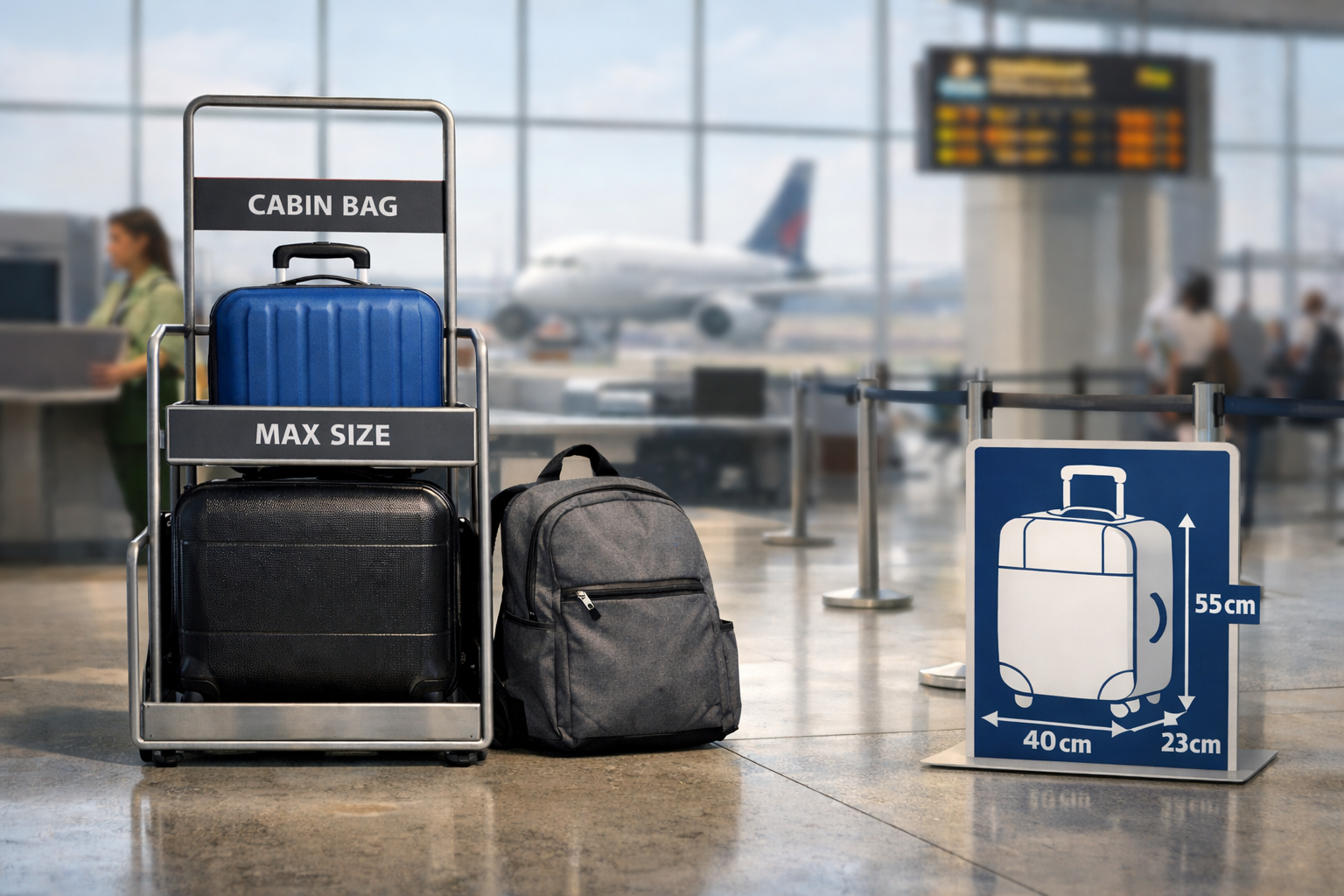
The standard hand carry luggage size allowed by most airlines at airports is approximately 55 cm × 40 cm × 20 cm (or 22 inches × 16 inches × 8 inches). This measurement includes the wheels, handles, and any external pockets also. The total linear dimension (length + width + height) should typically not exceed 115 cm (or 45 inches).
Pakistani carriers like; PIA, Airblue, and Serene Air generally follow these standards, though it's always wise to check your specific airline's policy before traveling. International airlines flying to and from Pakistan may have similar or slightly different restrictions but not much.
What Is the Standard Size of Cabin Luggage?
The majority of airlines accept the following cabin size luggage dimensions as standard:
- Length: 55 cm (22 inches)
- Width: 40 cm (16 inches)
- Depth/Height: 20 cm (8 inches)
- Total Linear Dimensions: 115 cm (45 inches)
These measurements guarantee that your bag will fit snugly under the seat or in the overhead storage space. Remember that these measurements include all protruding parts like wheels, telescopic handles, and side pockets.
Cabin Size Luggage Dimensions Explained
Understanding cabin size luggage dimensions requires knowing how airlines measure your bag. Many travelers make the mistake of measuring only the main compartment and forgetting about wheels and handles, which can lead to their bag being rejected at the gate.
The outermost points of luggage are measured by airlines. This implies that features like telescopic handles that protrude past the main body or wheels that raise the bag by 5 cm are included in the overall measures.
Cabin Size Luggage Dimensions (Length × Width × Height)
Airlines utilize the following formula when listing cabin size luggage dimensions:
Total Linear Dimension = Length + Width + Height
A bag that is 55 cm × 40 cm × 20 cm, for instance, has a total linear size of 115 cm. Because different bag shapes may have different individual measurements but comparable total sizes, airlines utilize this formula to assure uniformity.
Important measurement tips:
- Measure from the bottom of the wheels to the top of the handle
- Include any external pockets that protrude from the main body
- Measure the bag when it's empty and fully closed
- Use a measuring tape for accuracy rather than estimating
Most modern carry-on bags are specifically designed to meet these standard dimensions, but older luggage or bags marketed for different regions might not comply with Pakistani and international standards.
Airline Luggage Size Rules for Carry-On Bags
The main purposes of airline luggage size limits are space management and safety. Because the underseat and overhead compartments of airplanes are specified, luggage must fit within certain bounds. These regulations are aggressively enforced by airlines in Pakistani airports, particularly during the busiest travel seasons when flights are full. To determine whether your hand carry luggage size meets with requirements, gate agents may employ sizing frames, which are metal constructions that represent the maximum permitted dimensions.
You might have to check your suitcase in if it's larger than the allowed airline luggage size. This usually entails paying extra and having to wait at baggage claim when you arrive. Even appropriately sized luggage may occasionally need to be gate-checked if the flight is packed and overhead space is constrained. Depending on the airline and ticket class, hand-carried luggage weight restrictions normally fall between 7 and 10 kilograms (15 and 22 pounds). Higher allowances are occasionally given to first-class and business travelers.
What Size Luggage for Carry On International Flights?
The typical hand carry luggage size for international travel is 55 cm × 40 cm × 20 cm. Nonetheless, some foreign carriers may have somewhat more generous or restricted rules. Take into account the following before traveling abroad from Pakistan:
Regarding carriers in Europe: Most adhere to stringent EU rules and have dimensions that are comparable to Pakistani norms, albeit they might have lighter weight restrictions (around 8 kg).
For Middle Eastern carriers: Airlines like Emirates, Qatar Airways, and Etihad typically allow the standard dimensions but may offer higher weight allowances, especially for premium cabin passengers.
For American carriers: US-based airlines generally permit similar dimensions but often specify "one carry-on plus one personal item," where the personal item (like a laptop bag or purse) has its own size restrictions.
For Asian carriers: Airlines flying to destinations like China, Thailand, or Malaysia usually maintain international standard dimensions.
Always verify the specific airline luggage size policy for your carrier, as budget airlines might have more restrictive policies to encourage checked baggage fees.
Luggage Bag Size Chart for Easy Reference
To help Pakistani travelers quickly understand different luggage bag size categories, we've created easy-to-reference charts that show the differences between cabin luggage and larger checked bags.
Luggage Bag Size Chart (Cabin, Medium & Large)
| Luggage Type | Dimensions (cm) | Dimensions (inches) | Typical Use | Airline Category |
|---|---|---|---|---|
| Cabin/Hand Carry | 55 × 40 × 20 | 22 × 16 × 8 | 2-3 day trips, business travel | Carry-on allowed |
| Medium Suitcase | 65 × 45 × 25 | 26 × 18 × 10 | 4-7 day trips | Must be checked |
| Large Suitcase | 75 × 50 × 30 | 30 × 20 × 12 | 7-14 day trips, family travel | Must be checked |
| Extra Large | 80+ × 55+ × 35+ | 32+ × 22+ × 14+ | Extended stays, relocations | Must be checked |
This luggage bag size chart helps you visualize the differences between various luggage categories. Cabin size is significantly smaller than checked luggage, which is why careful packing is essential for hand carry bags.
How to Measure Luggage Size Correctly
Many travelers are uncertain about measuring their luggage bag size accurately. Following the correct method ensures you won't face surprises at the airport.
How to Measure Luggage Size at Home
Step 1: Prepare your luggage Empty your bag completely and close all zippers and compartments. Make sure any expandable sections are in their smallest configuration.
Step 2: Get a measuring tape Use a flexible measuring tape (like those used for sewing) or a rigid tape measure. Avoid estimating with a ruler, as you need to measure curved surfaces.
Step 3: Measure the length Place your luggage upright (as it would stand). Measure from the bottom of the wheels (or base if no wheels) to the highest point, which might be the top handle or the top of the main body. This is your length.
Step 4: Measure the width Measure the widest point from side to side. Include any side handles or protruding pockets.
Step 5: Measure the depth Measure from the front to the back at the thickest point. Include any front pockets that stick out.
Step 6: Calculate total dimensions Add all three measurements together. For hand carry luggage size, this total should not exceed 115 cm (45 inches).
Step 7: Check weight Use a luggage scale or bathroom scale to verify your bag meets weight requirements (typically 7-10 kg when packed).
Checked & Hold Luggage Size Explained
While this guide focuses on hand carry luggage size, it's helpful to understand the difference between cabin luggage and checked baggage.
Checked luggage, also called hold luggage, is stored in the aircraft's cargo hold during the flight. This type of luggage can be significantly larger and heavier than carry-on bags, making it suitable for longer trips or when you need to pack more items.
What Is Hold Luggage Size?
Hold luggage size varies more widely between airlines than cabin luggage sizes. However, general guidelines include:
Standard checked luggage dimensions: Usually up to 75 cm × 50 cm × 30 cm (30 × 20 × 12 inches) with a total linear dimension of 155 cm (62 inches).
Weight limits: Typically range from 20 kg to 30 kg (44 to 66 pounds) per bag, depending on your ticket class and airline:
- Economy class: Usually 20-25 kg per bag
- Business class: Often 30-40 kg total allowance
- First class: May allow 40-50 kg or more
Pakistani carriers generally offer 20 kg for economy passengers on domestic flights and 30 kg for international flights, though these numbers vary based on specific routes and fare types.
Weight-Based Luggage Size Questions Explained
Many Pakistani travelers search for luggage bag size using weight as a reference point, asking questions like "What size bag do I need for 23 kg?" This confusion arises because airlines specify weight limits but don't always clearly explain the corresponding physical dimensions.
What Is the Size of 23 Kg Luggage Bag?
A 23 kg luggage bag typically refers to checked luggage that can hold up to 23 kilograms of contents. The physical luggage bag size for this weight category is usually a medium to large suitcase with dimensions around:
- 65-70 cm × 45-50 cm × 25-28 cm (26-28 × 18-20 × 10-11 inches)
This is a popular size for international travel, as many international airlines allow one checked bag up to 23 kg for economy passengers. It's large enough for a week-long trip but still manageable to lift and maneuver.
Important note: The 23 kg refers to the maximum weight of the packed bag, not the bag's empty weight. Your luggage itself might weigh 3-5 kg empty, leaving you with 18-20 kg for your belongings.
What Is the Size of 30 Kg Luggage Bag?
A 30 kg luggage bag is a large suitcase designed to hold up to 30 kilograms of contents. The physical dimensions typically range from:
- 75-80 cm × 50-55 cm × 30-35 cm (30-32 × 20-22 × 12-14 inches)
These larger bags are ideal for extended trips, family vacations, or when you need to pack bulky items like winter clothing. Business class passengers and some economy tickets on long-haul international flights often include 30 kg allowances.
Keep in mind that even if your airline allows 30 kg, you need a sturdy, large suitcase to physically accommodate that much weight. A medium-sized bag simply won't have the volume to hold 30 kg of clothing and personal items comfortably.
Cabin Luggage vs Full Size Luggage
Understanding the difference between cabin size luggage size and full-size luggage helps you choose the right bag for your journey.
Cabin luggage (hand carry) is compact and designed for overhead storage or under-seat placement. It's perfect for short trips where you don't need many outfit changes or when you want to avoid checked baggage fees and waiting times.
Full-size luggage is checked baggage that offers significantly more packing space. It's necessary for longer trips, family travel, or when you need to bring items that aren't allowed in the cabin (like full-size toiletries, sharp objects, or sports equipment).
What Is Full Size Luggage?
Full size luggage typically refers to the largest suitcases allowed as checked baggage on airlines. These bags usually measure:
- 75-80 cm × 50-55 cm × 30-35 cm (30-32 × 20-22 × 12-14 inches)
- Total linear dimensions: Up to 155-158 cm (62 inches)
- Weight capacity: Can hold 25-30 kg of belongings when packed
Full-size luggage is ideal for:
- Trips longer than one week
- Family vacations where multiple people share bags
- Travel to destinations with varying weather requiring different clothing
- Bringing gifts or shopping extensively at your destination
- Relocations or extended stays
These larger bags must always be checked and cannot be carried onto the aircraft.
Carry-On Luggage Size Comparison Chart
Comparing hand carry luggage size directly with checked luggage sizes helps illustrate the significant difference in capacity.
Cabin Size vs Checked Luggage Size Chart
| Feature | Cabin/Hand Carry Luggage | Checked/Hold Luggage |
|---|---|---|
| Standard Dimensions | 55 × 40 × 20 cm (22 × 16 × 8 in) | 70-80 × 45-55 × 25-35 cm (28-32 × 18-22 × 10-14 in) |
| Weight Limit | 7-10 kg (15-22 lbs) | 20-30 kg (44-66 lbs) |
| Location During Flight | Overhead bin or under seat | Cargo hold |
| Typical Trip Duration | 1-3 days | 4-14+ days |
| Additional Fees | Usually included in ticket | Often included, sometimes extra fee |
| Risk of Loss/Delay | Very low (stays with you) | Moderate (handled separately) |
| Packing Restrictions | Limited liquids, no sharp objects | More flexible, but no prohibited items |
| Access During Flight | Full access throughout flight | No access until arrival |
This comparison clearly shows why many business travelers and short-trip passengers prefer cabin-size luggage—it offers convenience and peace of mind despite the smaller capacity.
Choosing the Right Luggage Bag Size for Your Travel Needs
Selecting the appropriate luggage bag size depends on several factors including trip duration, destination, purpose of travel, and personal packing habits.
For domestic flights within Pakistan: If you're traveling between Karachi, Lahore, Islamabad, or other cities for 1-3 days, cabin size luggage is usually sufficient. You can pack 2-3 outfit changes, toiletries, and essential electronics comfortably.
For international business trips: A properly packed hand carry luggage can accommodate up to 5 days of business attire if you pack efficiently. This eliminates baggage claim waits and reduces the risk of lost luggage affecting important meetings.
For family vacations: Longer trips with family members typically require checked luggage. However, each person can still carry a cabin bag for valuables, entertainment devices, and a change of clothes in case checked bags are delayed.
For extended stays: If you're relocating, studying abroad, or taking an extended vacation, you'll definitely need full-size checked luggage, possibly multiple bags.
Selecting Hand Carry Luggage Size for Short & Business Trips
For short trips and frequent business travel, choosing the right hand carry luggage size maximizes efficiency. A properly sized cabin bag allows you to:
- Skip check-in lines and proceed directly to security
- Avoid baggage claim waiting times
- Reduce risk of lost or delayed luggage
- Move quickly between connecting flights
- Save on checked baggage fees on budget airlines
When selecting from a hand carry luggage collection, look for features like:
- Dimensions that fit well within 55 × 40 × 20 cm limits
- Four spinner wheels for easy maneuverability through crowded terminals
- Multiple compartments for organization
- TSA-approved locks for security
- Durable, lightweight materials that don't eat into your weight allowance
Choosing Medium or Large Luggage Bags for Long Trips
For trips extending beyond a few days, you'll need to consider medium or large checked luggage. When browsing travel luggage bags for longer journeys, consider:
Medium suitcases (65-70 cm) work well for:
- 4-7 day vacations
- Trips where laundry facilities are available
- Travel to destinations with similar climates to Pakistan
Large suitcases (75-80 cm) are better for:
- Trips lasting more than a week
- Travel to locations with varying weather requiring different clothing types
- Family trips where you're packing for multiple people
- Shopping trips where you'll bring back purchases
Quality luggage from a reliable suitcase collection should offer expandable capacity, reinforced corners, smooth-rolling wheels, and protective hard or soft shells depending on your preference.
Common Airline Luggage Size Questions Answered
Pakistani travelers frequently have similar questions about airline luggage size regulations. Here are clear answers to the most common queries.
What Size Is Cabin Size Luggage?
Cabin size luggage follows the international standard of approximately 55 cm × 40 cm × 20 cm (22 × 16 × 8 inches) with a total linear dimension not exceeding 115 cm (45 inches). This includes all external parts like wheels and handles. Weight limits usually range from 7-10 kg depending on the airline.
What Size of Luggage Can You Take on a Plane?
You can take hand carry luggage measuring up to 55 × 40 × 20 cm into the cabin with you. For checked luggage, most airlines allow bags up to 75-80 × 50-55 × 30-35 cm with a total linear dimension of about 155-158 cm. The specific airline luggage size and weight allowances vary by carrier, ticket class, and route, so always verify with your specific airline before traveling.
Common Mistakes Travelers Make with Luggage Size
Even experienced travelers sometimes make errors when assessing their luggage bag size. Avoiding these common mistakes saves time and stress at Pakistani airports.
Mistake 1: Not measuring before arriving at the airport Many travelers assume their bag is cabin-size compliant without actually measuring it. Always measure your luggage at home using the method described earlier.
Mistake 2: Forgetting about weight limits Even if your bag fits the size requirements, exceeding the weight limit (typically 7-10 kg) will result in having to check your hand carry luggage.
Mistake 3: Overstuffing bags An empty bag might meet size requirements, but overstuffing can make it bulge beyond acceptable dimensions. Pack reasonably and ensure all zippers close smoothly.
Mistake 4: Bringing prohibited items in cabin luggage Items like full-size liquids, sharp objects, and certain electronics must go in checked luggage. Review airline security guidelines before packing.
Ignoring Wheels and Handles While Measuring
This is perhaps the most common mistake when measuring luggage bag size. Many travelers measure only the main body of the suitcase, forgetting that airlines measure from the outermost points.
Why this matters:
- Wheels typically add 3-5 cm to the height
- Telescopic handles and top grab handles can add another 2-3 cm
- External pockets may protrude 1-3 cm from the sides
A bag that seems to be 52 cm tall when measuring just the body might actually be 57 cm when you include the wheels, putting it over the 55 cm limit. Always measure from the very bottom of the wheels to the highest point of the bag to get an accurate hand carry luggage size measurement.
Final Tips for Choosing the Right Hand Carry Luggage Size
As you prepare for your next journey from Pakistani airports, keep these essential tips in mind:
Tip 1: Always verify your specific airline's hand carry luggage size and weight requirements before traveling. While standards are similar, variations exist.
Tip 2: Invest in quality cabin luggage that's designed to meet international standards. Look for bags labeled as "cabin-size" or "carry-on approved" from reputable brands.
Tip 3: Use packing cubes and compression bags to maximize space within your cabin size luggage dimensions without making the bag bulge.
Tip 4: Keep your most valuable and essential items in your hand carry—electronics, medications, important documents, and a change of clothes.
Tip 5: If you're close to the weight or size limits, consider wearing your heaviest shoes and jacket during travel rather than packing them.
Tip 6: For families traveling together, distribute weight and items across multiple cabin bags to make the most of everyone's allowance.
Tip 7: Take a photo of your luggage bag size chart or save airline guidelines on your phone for quick reference at the airport.
Tip 8: Arrive at the airport with extra time if you're unsure about your luggage compliance. This allows time to repack or check your bag if necessary without missing your flight.
Conclusion – Understanding Hand Carry Luggage Size in Pakistan
Understanding hand carry luggage size regulations is essential for stress-free travel through Pakistani airports. The standard dimensions of 55 cm × 40 cm × 20 cm (22 × 16 × 8 inches) with a weight limit of 7-10 kg apply to most airlines operating in Pakistan, though minor variations exist between carriers.
Whether you're traveling domestically between Pakistani cities or flying internationally, knowing the difference between cabin size luggage dimensions and checked hold luggage size helps you pack appropriately. Remember that airline luggage size requirements exist for safety and practical reasons—overhead compartments and under-seat spaces have fixed dimensions that cannot accommodate oversized bags.
Before your next trip, measure your luggage correctly (including wheels and handles), verify your specific airline's policies, and pack within the allowed limits. Use our luggage bag size chart as a quick reference to distinguish between cabin luggage and various checked luggage sizes.
By following the guidelines in this comprehensive guide, you'll navigate Pakistani airports smoothly, avoid unexpected fees, and start your journey with confidence. Safe travels!

Written by Ali Abbass